 Menu
Menu


SUSTAINABILITY
THAT WORKS.
We develop solutions that will also work for future generations.
As a fifth-generation family-owned company, we have always made decisions with a long-term perspective and future generations in mind. For us, sustainability is not just a current trend but the foundation of future-oriented business practices and long-term success. As a producer of building materials, we are part of a resource- and energy-intensive basic materials industry. This is why we are committed to continuously developing improved products, processes and solutions, driven by high standards of quality and innovation.
We are convinced that more sustainable building materials are a key factor on the path to future-oriented construction.
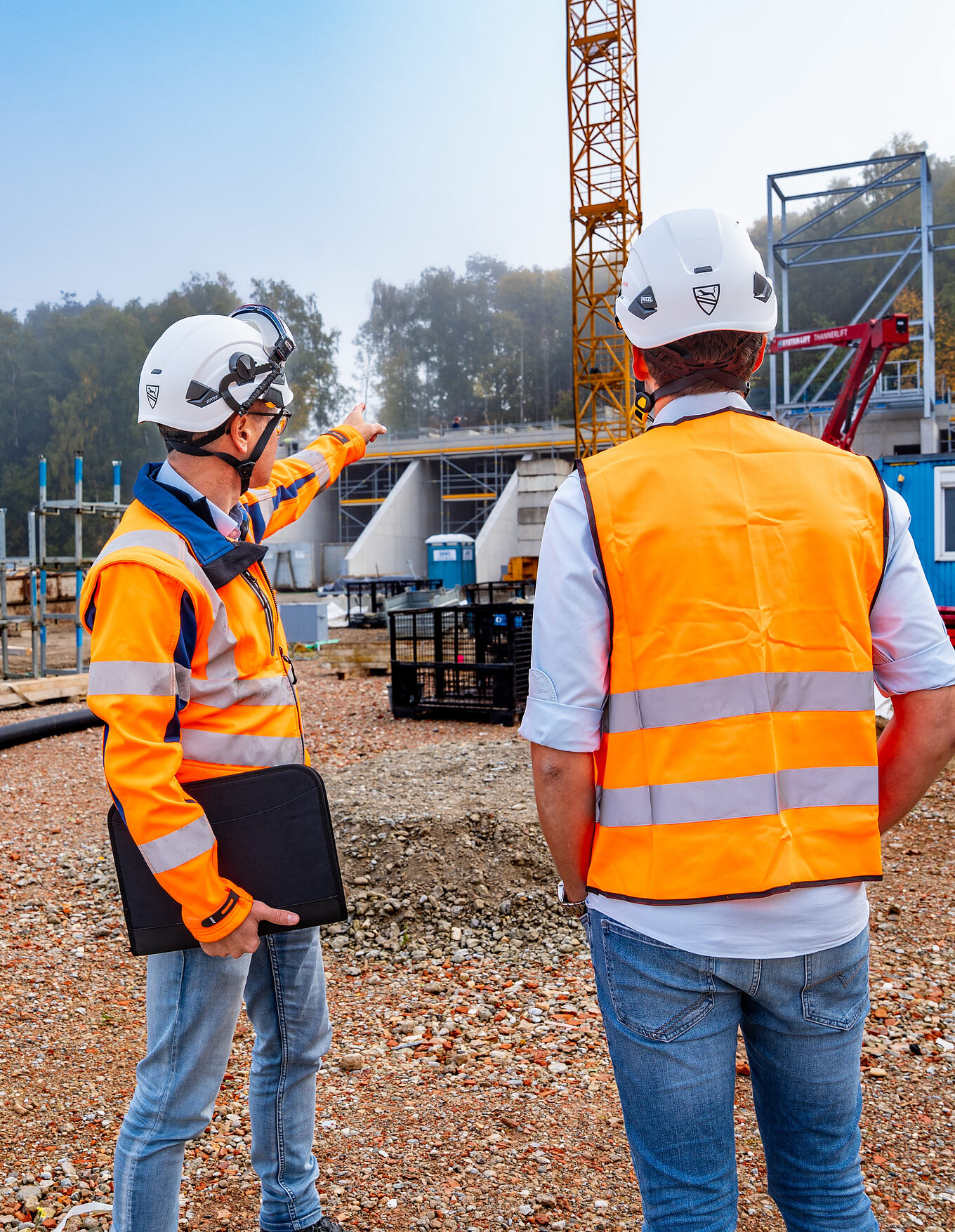
It’s all in the mix – to achieve more sustainability, we’re making adjustments in many areas.
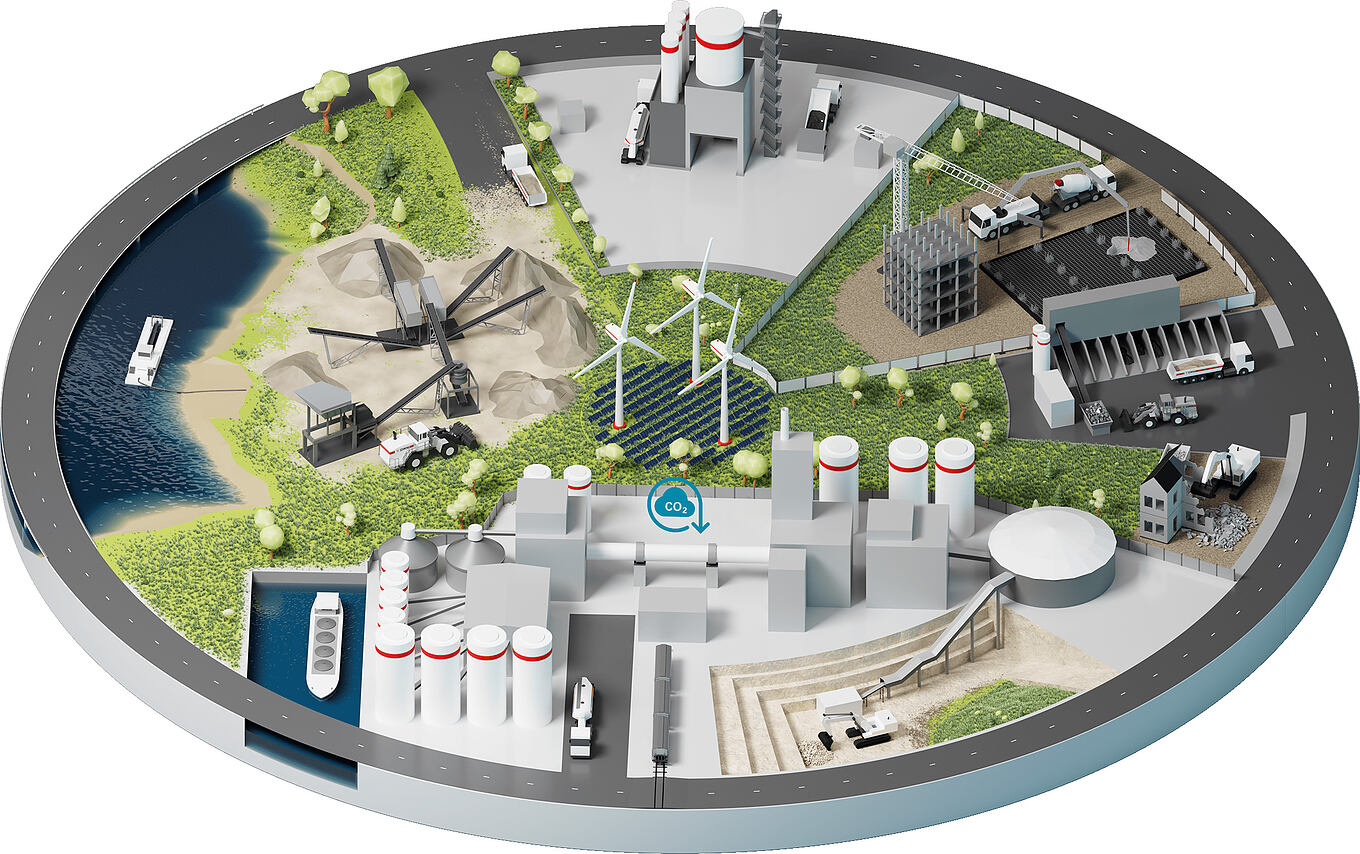
Clinker production
1) Use of alternative raw materials
SCHWENK replaces more than 14% of its natural raw materials with alternative materials. These are combined in such a way as to ensure that our quality standards are met. By using alternative raw materials, we conserve resources, close material loops, and reduce emissions.
2) Use of alternative fuels
At SCHWENK, the use of alternative fuels such as dried sewage sludge or BGS is standard practice. For years, we have been a leader in the German cement industry in terms of alternative fuel usage, which results in lower CO₂ emissions from cement production.
Cements with less clinker
The targeted reduction of the clinker content in cement reduces the product’s CO₂ emissions. This is achieved through the use of grinding aids that replace conventional components. To make this transformation future-oriented, we are investing extensively in procurement and long-term security and are continuously advancing research into alternative raw materials.
A milestone in this development is our groundbreaking innovation ‘meca-clay’: for the first time, we have succeeded in converting all types of clay into highly reactive cement additives using only electrical energy – a decisive step towards more climate-friendly building materials.
CCU | CCS
Since around two-thirds of emissions in cement production are process-related, there are technical limits to how much they can be avoided. Our goal is therefore to capture the unavoidable CO₂ directly in the manufacturing process – with the help of modern carbon capture technologies.
The captured CO₂ can then either be liquefied and permanently stored underground (CCS – Carbon Capture & Storage) or, in combination with hydrogen, further processed into new products such as synthetic fuels using various methods (CCU – Carbon Capture & Use).
We are pursuing several technological approaches for CO₂ capture in SCHWENK cement plants:
- Oxyfuel technology
- Tail-end technologies
Concrete with improved sustainability features
The use of clinker-reduced cements has a significant impact on the Global Warming Potential (GWP) of concrete.
Another step toward more sustainable construction is the use of recycled aggregates in concrete. They play an important role in conserving natural resources.
Learn more about our concrete with improved sustainability features
Modern and Efficient Construction Methods Using Concrete
Thanks to extensive innovations, modern construction methods using concrete can already be successfully implemented today. These methods incorporate both advanced manufacturing processes, such as 3D printing, and product innovations, such as carbon concrete and lightweight concrete. They enable structures to meet the most demanding engineering requirements.
Circular economy and recycling
The circular economy is becoming increasingly important in the construction industry. Since 2023, SCHWENK has been consolidating its circular economy activities in a separate division.
Logistics
At SCHWENK, reliable, punctual and cost-efficient delivery to our customers is our top priority. Even when customer demand fluctuates significantly, we remain a reliable partner with deliveries that are accurate to the hour.
Our building materials are naturally heavy. Whenever possible, we use inland waterway vessels and rail to transport raw materials and deliver building materials.
Energy
Across all locations and divisions, we at SCHWENK are pursuing an increase in the proportion of green electricity. In addition to concluding various power purchase agreements (PPAs), we are working on a number of projects to reduce the overall electricity consumption of our plants.
Our certified energy management system in accordance with DIN EN ISO 50001 helps us to systematically record, analyse and continuously optimise our energy consumption.
Renaturation and recultivation
Rock extraction projects involve interventions in nature and the landscape that can last for several decades. This makes it all the more important to limit these interventions to what is absolutely necessary. Our approach is based on holistic concepts that both minimise land use and ensure the full utilisation of natural resources. In addition, we make targeted use of alternative raw materials to further reduce the environmental impact.
Even during ongoing mining operations, we create new habitats for pioneer species and rare animal and plant species through our migratory biotope concept. As part of our biodiversity management plans and species conservation projects, we specifically promote endangered species and biotic communities – for example, through measures to reintroduce the grey partridge.
The land is always used in compliance with the law and in close consultation with the relevant licensing authorities and local communities. The aim is to avoid conflicts of use and to implement renaturation in a professional manner that is adapted to the natural environment. We also adhere to a binding guideline that takes into account operations in areas with potential land use conflicts. The definition of such sensitive zones is based on internationally recognised guidelines, such as UNESCO World Heritage Sites and the protected area categories of the International Union for Conservation of Nature (IUCN).
The Cement Industry’s path to more sustainability in numbers (in millions of tons of CO2).

Occupational health and safety is our top priority.
This applies to our employees and all persons present on our premises.
By introducing a management system for occupational health and safety, we have successfully created the conditions for this. As part of our occupational health management programme, we also promote the physical and mental health of our employees in the long term.
Legal compliance and transparency.
Compliance with legal and regulatory requirements is only a minimum requirement for us. We go one step further.
Certifications:



Appeal process
Our complaints procedure can be used to report actual or potential violations in the area of human rights or environmental obligations.
Procedural regulations for the complaints procedure concerning human rights and environmental protection