 Menu
Menu


AT SCHWENK
Closing the gap/construction of the BAB 14 in Saxony-Anhalt within the 1.4 Tangerhütte–Lüderitz section
The construction project represents a section of the approximately 155-kilometer-long extension of the BAB 14 between Magdeburg and Schwerin and is part of the overall plan for the so-called “Hosenträger” variant. In addition to the work on the BAB 14, this plan calls for a second north-south highway connection between Lüneburg and Wolfsburg on the BAB 39, as well as the construction of the B 190n as an east-west link in the greater Salzwedel–Seehausen area.
With the completion of the missing section of the BAB 14—the central component of the overall plan—the regions of Altmark in Saxony-Anhalt, Prignitz in Brandenburg, and Ludwigslust in Mecklenburg-Western Pomerania will be optimally connected to the broader, long-distance highway network.
This construction site report covers the continuation of work on the new construction of the A 14 federal highway between Magdeburg and Schwerin in traffic section 1.4, from the Tangerhütte interchange to the Lüderitz interchange. The total length of the construction project is 14,826 m and includes 18 bridge structures as well as numerous glare barriers, noise barriers, and collision protection fences.
The construction section of the BAB 14, VKE 1.4, begins near the town of Dolle, east of the B 189, and after approximately 3.5 km turns to run parallel to the existing B 189. About three-quarters of the way along the route, the highway crosses the B 189, so that the Lüderitz interchange is located on the west side of the B 189 and west of the town of Lüderitz.
The work on the construction of the concrete roadways, which is the main focus of this report, was carried out by STRABAG Großprojekte GmbH. Between November and early December 2022, this company—which has extensive experience in concrete road construction—constructed approximately 12,497 m of concrete roadways with a strength class of C30/37. Due to weather and seasonal conditions, further work on the completion of the aforementioned subproject will resume in April 2023.
The road surfaces completed to date cover an area of approximately 177,000 m², for which about 45,000 m³ of pavement concrete was poured.
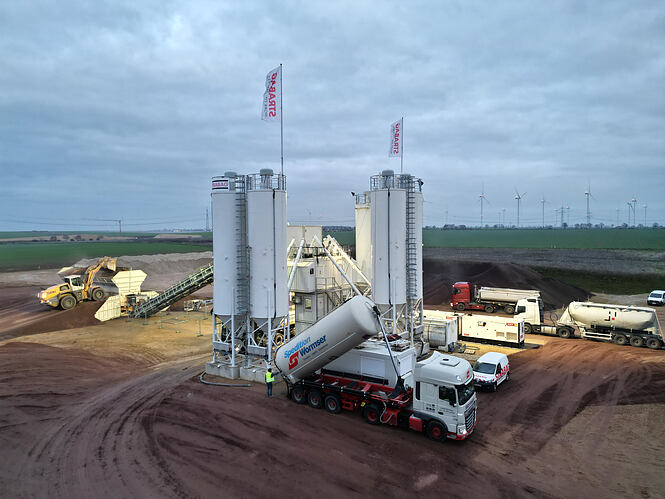
Figure 1: STRABAG on-site mixing plant (Source: P. Brix, STRABAG)
The pavement concrete was placed on a 10-centimeter-thick asphalt base course in accordance with the regulations in effect in Saxony-Anhalt. This is highly beneficial not only for the load-bearing capacity of the roadways but also for protecting the subgrade during the logistics involved in delivering the concrete.
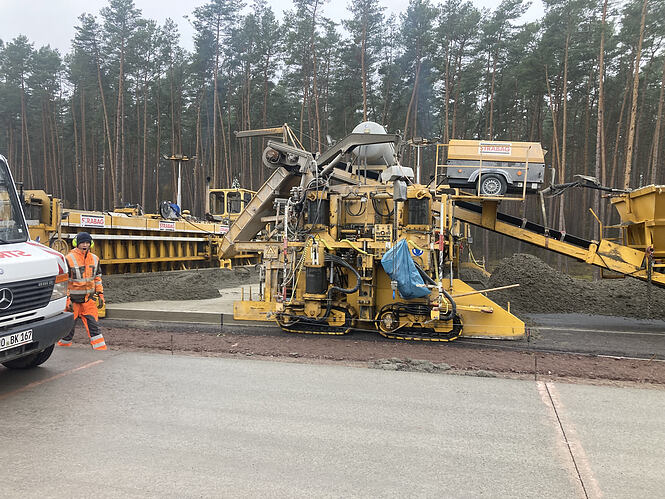
Figure 2: Placement of the upper and lower concrete layers using a paver (Source: SCHWENK)
In accordance with the relevant regulations for concrete pavement construction on highways, a 21-centimeter base course and a 5-centimeter surface course were installed.
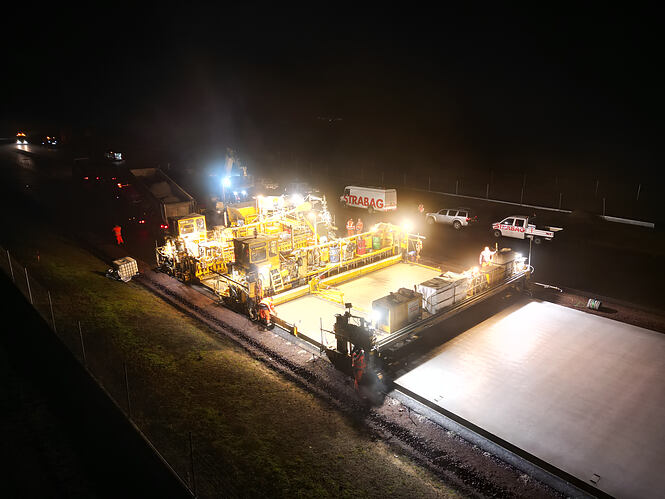
Figure 3: Concrete placement during the night shift (Source: P. Brix, Strabag)
Sand from a Cemex quarry in Rogätz and crushed stone from the BASt-listed quarry in Mammendorf were used to produce the top and base concrete layers. In addition, approximately 8,652 tons of SCHWENK CEM I 42.5 N (sd) road surface cement—which has already proven itself on many highways and concrete road construction sites—from the Bernburg plant were used. The necessary construction chemicals were supplied by MBCC. Masterair 125 was used as a concentrate, diluted 1:3 at the mixing plant and applied as BV 25 concrete superplasticizer. The curing agent used, which was applied very evenly using a trailing spray bar, was also supplied by MBCC.
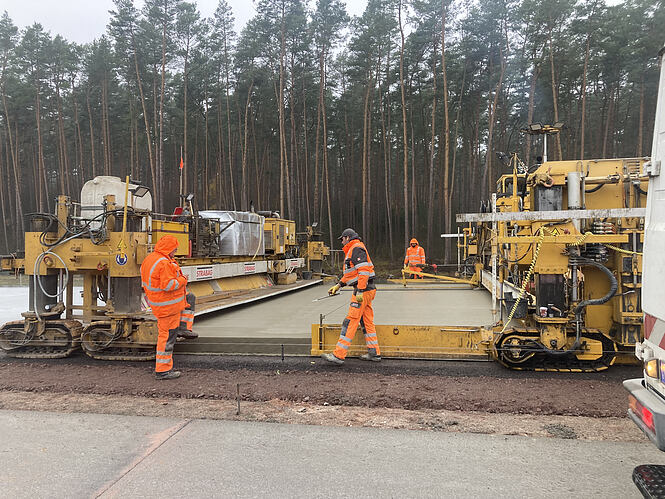 Bild 4 Glätten des Betons/Sprühbrücke für Nachbehandlung (Quelle: SCHWENK)
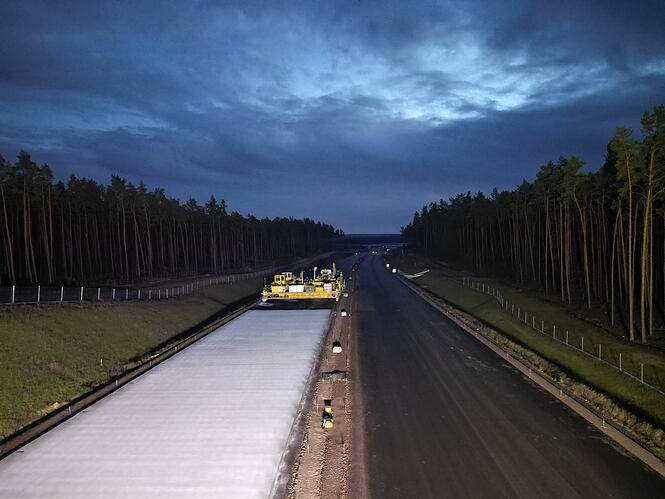
Figure 5: Nighttime photograph of a treated concrete section (Source: P. Brix, Strabag)
In the next phase of work, OAT created the required exposed aggregate concrete texture by sweeping the surface and cut the expansion joints. This company also has extensive experience with work that is highly dependent on temperature and humidity.
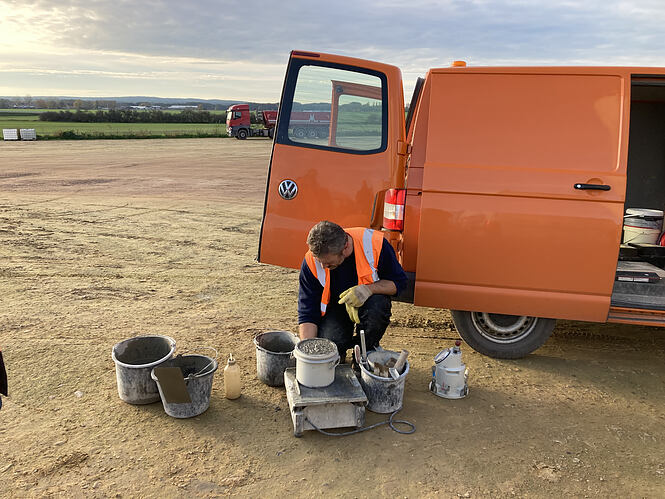
Figure 6: Concrete quality control (Source: SCHWENK)
The concrete work was carried out under constant internal and external supervision. Once the parameters were set during the trial mix, there were virtually no fluctuations in consistency or the required air content throughout the entire period.
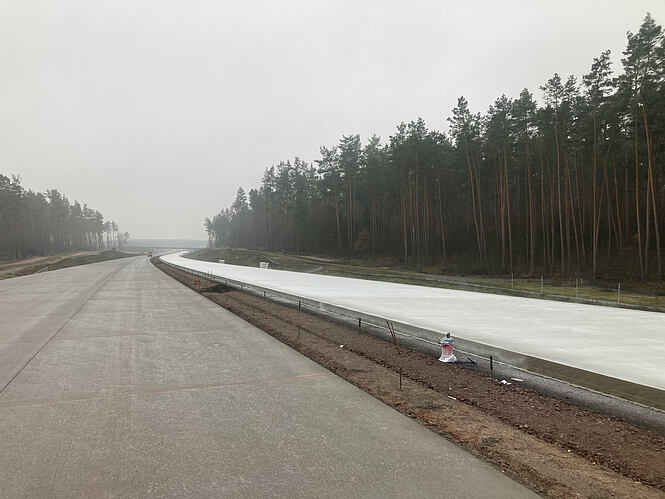
Figure 7: Finished concrete pavement—on the left with a joint cut, on the right still undergoing post-treatment before mechanical sweeping (Source: SCHWENK)