 Menu
Menu


AT SCHWENK
Focus on high energy costs in production and clinker-efficient cements
The SCHWENK Concrete Seminars 2022
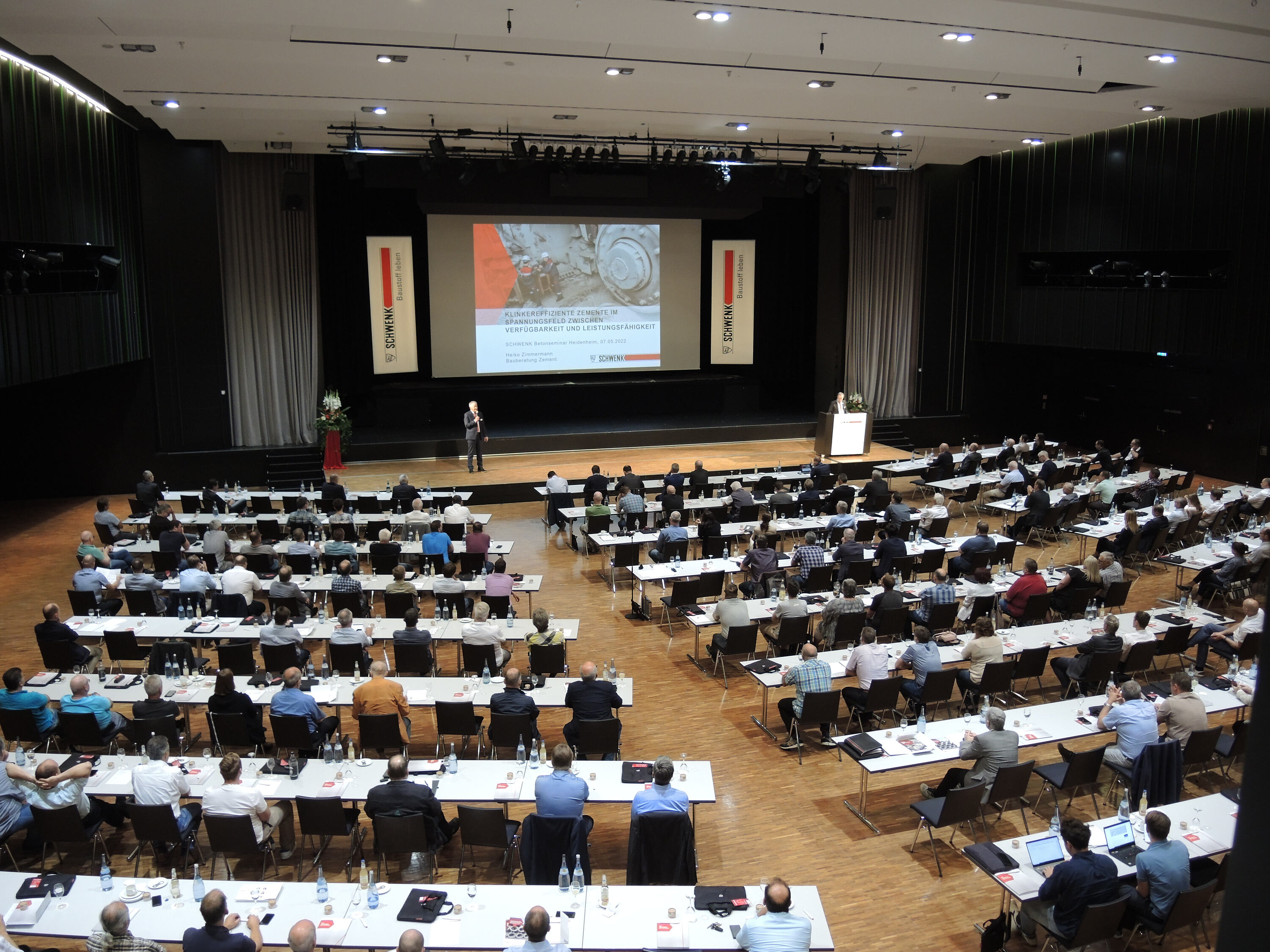
For many years, it has been a tradition to kick off the new construction season in January with the SCHWENK concrete seminars. Not so this year. For the first time in the summer, nearly 600 participants accepted the invitation to attend the concrete seminars hosted by SCHWENK Zement GmbH & Co. KG at the three locations in Schweinfurt, Heidenheim, and Leipzig in late June and early July. Last year, due to the pandemic, interested parties were able to learn about developments within the corporate group in a condensed, digital format via a two-hour livestream.
The in-person events organized by SCHWENK Bauberatung are a regular fixture on the calendars of clients, concrete manufacturers, construction companies, government officials, architectural and engineering firms, and representatives from universities. They all took advantage of this industry gathering to learn about current topics related to cement and concrete as building materials and to reconnect in person.
Once again, the major themes of decarbonization and energy costs ran like a common thread through the seminar program. These are the key challenges facing cement and concrete manufacturers now and in the future.
Werner Rothenbacher, the director of SCHWENK Construction Consulting, led the seminar program and moderated the discussions. He expressed his delight that the seminars could finally be held in person again.
Dr. rer. nat. Hendrik Möller, a member of the executive board of SCHWENK Zement GmbH & Co. KG, welcomed the participants and delivered the first presentation, “Current Developments at SCHWENK and in the Industry.” The industry currently faces far-reaching decisions that inevitably lead to tensions and strains in its relationships with customers and partners. Much of this is quite complex and requires explanation.
In a retrospective analysis set within a historical context, Möller showed that the company has had to overcome many crises since its founding in 1847 and yet has ultimately continued to grow. SCHWENK, as a company, is therefore certainly battle-tested. Setbacks were accepted as challenges and overcome. In this respect, looking back on 175 years of company history can help put the current situation into perspective, putting certain problems into perspective and, to some extent, offering encouragement. The surge in energy prices and supply chain issues currently appear to be jeopardizing the construction industry’s growth. As part of an energy-intensive industry, the sharp rise in electricity costs has a direct impact on manufacturing costs.
Regarding natural gas and crude oil, it was explained that SCHWENK had already converted the fueling of its cement kilns to nearly 100% alternative fuels years ago. Nevertheless, using “refractory material” for the lining of rotary kilns as an example, the effects are directly evident in high material costs. Similar to the ceramics and glass industries, these products must be manufactured at high temperatures using virtually ash-free fuel. The refractory bricks are therefore produced at very high temperatures using natural gas. Further price increases—some of them drastic—have occurred for explosives, grinding aids, and NOx reduction agents.
In the rest of his presentation, he clearly and transparently demonstrates how energy production and CO2 emissions trading are closely linked, and which scenarios lead to which cost implications.
Finally, the current status of the Celitement flagship project was presented. Last year, the third expansion phase of the pilot plant in Eggenstein-Leopoldshafen was successfully completed. Now that research on this novel binder has been completed, the project has entered the final phase of market preparation. To provide innovators with sufficient quantities of test material, the existing pilot plant was expanded to a capacity of up to 5 metric tons per week. Celitement offers a unique combination of properties previously unseen in conventional binders. These include very low heat of hydration coupled with very rapid strength development, combined with very high sulfate resistance. Celitement consists of pure CSH phases and is not a binder that fits within the cement standard. For this reason, an application for general building authority approval has now been submitted to the DIBt in Berlin. Experts are currently still deliberating on the very comprehensive testing plan. According to the current schedule, the first industrial reference plant is expected to begin producing material with building authority approval for the market starting in 2025.
This product innovation offers hope for a breakthrough in the production of additional binders with a reduced carbon footprint. In this regard, Celitement stands on equal footing with well-known Portland cements—which have been developed over more than 175 years to deliver peak performance and offer a wide range of properties.
Under the theme “Clay-Reduced Cements: Balancing Availability and Performance,” construction consultants Dipl.-Ing. Heiko Zimmermann in Heidenheim and M.Sc. Christian Fratscher in Schweinfurt and Leipzig discussed the challenges facing the cement industry. Particular attention was paid to new binders, future additives, and the planned CI4C (Cement Innovation for Climate) plant in Mergelstetten.
In southern Germany, SCHWENK is in the process of establishing a CEM II/B-M (V-LL) 42.5 N (az) (Allmendingen plant) as a bulk cement in ready-mix concrete. The cement has been granted a general building authority approval (abZ) in the form of an application approval by the German Institute for Building Technology (DIBt) for use in all exposure classes according to DIN 1045-2 / DIN EN 206-1. CEM II/C-M cements in accordance with the new DIN EN 197-5 enable a further step toward CO₂ reduction. These cements, which contain 36–50 M.-% of two additional main components in addition to clinker, feature a further reduced clinker content. SCHWENK was one of the first manufacturers to receive general building authority approval for a CEM II/C-M (S-LL) 42.5 N (Karlstadt plant) and a CEM II/C-M (V-LL) 42.5 N (Allmendingen plant). These cements offer good performance and are currently suitable for use in all exposure classes except XF2 through XF4. An extension of the approval for the S-LL variant is expected later this year, which will allow for use in all exposure classes. In the future, however, cements such as CEM II/B-LL may be subject to application restrictions or specific application rules. It is therefore essential that concrete manufacturers create storage capacity to be able to use clinker-reduced binders in a way that is tailored to specific structural components and aligned with the exposure classes.
A far-reaching and comprehensive revision of the regulatory framework for concrete is on the horizon. The head of
construction consulting, Dipl.-Ing. Werner Rothenbacher, provided an overview of the drafts of Parts 1 through 4, as well as the overarching Part 1000, “Fundamentals and Concrete Quality Classes (BBQ),” of DIN 1045. The goal is to categorize the complexity of construction projects into different concrete quality classes and to clearly define the interfaces between design, concrete production, and construction. To strengthen the necessary communication, the requirements for BBQ-N (normal requirements), BBQ-E (increased requirements), and BBQ-S (requirements to be specifically defined) are being tightened. Planning and construction were also guided by this tiered system. The classification regarding concrete construction quality depends largely on the structure’s intended use, the applicable exposure classes, strengths, and construction methods/curing. Exemplary classifications provided participants with clarity on the system.
To increase sedimentation stability and thus the durability of concrete, a table specifying a minimum binder volume—based on the maximum aggregate size and consistency class—will be introduced in the future. Using calculation examples, Rothenbacher demonstrated that standard, field-proven mix designs generally meet these minimum values. Further additions were made in the area of concrete with recycled aggregates (R-concrete). Accordingly, the provisions of the DAfStb guideline have now been incorporated into the standard and supplemented in some areas. This allows for the co-use of Type 1 recycled sand under defined conditions. If everything goes according to plan, the package of regulations is expected to be introduced in 2023. SCHWENK will actively support its customers in implementing these changes within their companies through training and resources.
Due to increasing climate change, those involved in construction will increasingly have to address the challenge of “concrete construction in hot temperatures.” Construction consultants Dipl.-Ing. Kai Fischer (Schweinfurt and Heidenheim venues) and Dipl.-Ing. Sven Mellwitz in Leipzig discussed the measures, possibilities, and limitations in their presentation. They provided an overview of the projected medium-term increase in summer days and hot days, as well as the range of direct effects that fresh concrete temperature has on setting behavior, changes in concrete consistency, plastic shrinkage, and strength development. Since 1978, German regulations have generally limited the temperature of fresh concrete to 30 °C on an empirical basis. Specifically, the Supplementary Technical Contract Conditions (ZTV) for civil engineering and hydraulic engineering sometimes permit only 25 °C. Other countries in Europe and internationally often consider 35 °C to be the general upper temperature limit. Cement data sheets and the DBV data sheet “Summer and Winter Concrete Mixes,” which specifies the “appropriate measures” outlined in DIN 1045-3, are helpful for practical application.
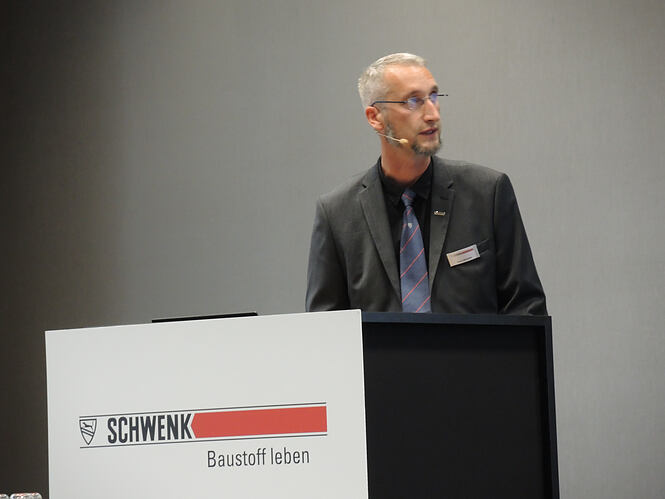
Figure 2: Sven Mellwitz, B.S. in Engineering, © SCHWENK
The speakers supplemented the recommendations with helpful tips from their consulting experience. When developing a special summer mix design—and this is the good news—clinker-efficient cements of the CEM II/B-M, CEM II/C-M, or CEM III types with strength development classes N or L offer technical advantages. For massive structural elements, the addition of admixtures in combination with LH cements can further reduce the heat of hydration within the element. The presentation also provided guidance on the optimal timing for concrete placement and outlined the various options for cooling the three main concrete raw materials as well as the fresh concrete—for example, using liquid nitrogen. On the SCHWENK Bauberatung website, a calculation program can be used to determine the effects of cooling measures. Based on data from completed construction projects, the costs and efficiency of the various measures were objectively presented, along with their advantages and disadvantages.
The highly complex and costly process of internal concrete cooling—using stainless steel pipes embedded in the concrete and a cooling water circuit to reduce the core temperature and maintain a temperature difference of <15 Kelvin between the surface and the core—was demonstrated using the pylon base of the Elbe River Bridge in Magdeburg as an example. Looking ahead, preliminary results from the research project conducted by the Universities of Bochum and Hannover on the strength development and durability of concrete at fresh concrete and curing temperatures of 20, 30, and 40 °C were presented. It is becoming apparent that known concrete properties and sufficient durability are likely to be achieved up to 35 °C. Further investigations in a follow-up project will now examine the scientifically interesting range between 35 and 40 °C in greater detail, thereby paving the way for establishing a higher permissible fresh concrete temperature in the regulatory framework.
Concrete construction in hot temperatures is successful when the necessary tests and organizational measures are carried out in advance by the concrete supplier and the construction site, in close coordination and with a fair distribution of risk.
Using well-founded data and facts on the topic of “concrete versus wood,” the managing director of the Concrete Information Center (IZB), Dipl.-Wirt.-Ing. Ulrich Nolting, demonstrated in Schweinfurt and Heidenheim how the two building materials—concrete and wood—are portrayed in very contrasting ways in the media and by the public, and what potential for the use of wood fundamentally exists. He emphasized that both building materials have their technical merits and stressed how important it is to communicate the advantages and strengths of concrete construction. The political establishment’s one-sided bias in favor of wood is not particularly helpful in this regard.
About 31% of Germany’s land area consists of forest, of which only about 4% cannot be used for logging due to nature conservation regulations or unfavorable terrain conditions. In 2020, approximately 80 million m³ of wood was harvested from the forests. Due to the drought and storms of recent years, this consists predominantly of damaged timber, mainly spruce, fir, or other conifers. Interestingly, 60% of the harvested wood is used for energy production, while only about 13% actually goes into the construction sector. Since 2006, the share of wood construction in single- and two-family homes—which accounts for 11% of cement consumption—has grown from 12.8% to 19.7% (2020). For multi-family homes and non-residential construction, the shares have remained relatively constant at 2% and 6.6%, respectively. These two sectors account for 21% and 34%, respectively, of cement consumption in Germany. To make an accurate estimate of future wood demand, an average wood consumption of approximately 0.3 m³/m² of gross floor area can be assumed. Based on an analysis of various studies, the IZB used its own calculations to estimate the future trend in the timber construction rate and the amount of concrete that will be substituted in building construction. According to these estimates, assuming the current timber construction rate doubles across the entire building construction sector, a 4% decline in concrete volume is expected.
Despite the modest decline, the mineral-based building materials industry cannot afford to rest on its laurels; rather, it is called upon to meet its climate targets and drive transformation while maintaining open communication. This can be successfully achieved through collaborative action across the value chain, a concrete plan with specific goals, and an open approach to technology. Whether it’s renewable energy, urban development, or infrastructure, Nolting is certain of one thing: the future will certainly not be possible without concrete.
Dr. Thomas Richter, Head of Engineering at IZB, gave the presentation in Leipzig.
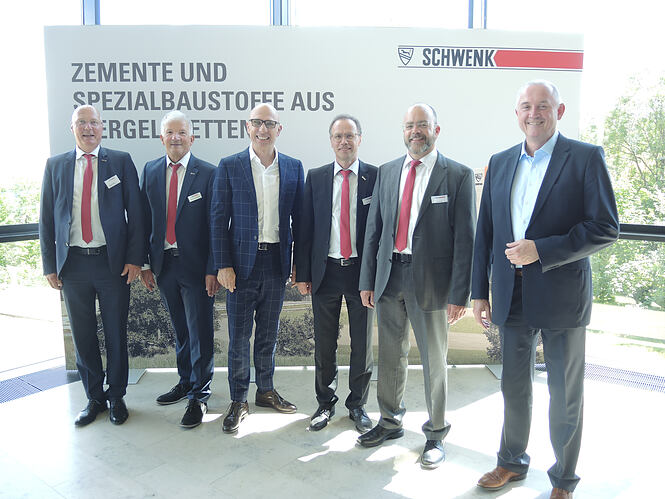
Figure 2: Speakers in Heidenheim (from left to right: Dr. Möller, Rothenbacher, Löhr, Zimmermann, Fischer, Nolting), © SCHWENK
During the lunch that followed, all participants had the opportunity to recharge their batteries and discuss the presentations among themselves or with the speakers.
The afternoon at the Concrete Seminars is dedicated to the well-known speakers and experts who present interesting topics beyond the building materials cement and concrete.
In Schweinfurt, Urs Meier—a former referee, soccer expert, and entrepreneur from Switzerland—entertained the audience with his anecdotes and expertise on the topic “Between the Front Lines: Making Decisions Under Pressure.” Using examples from his career as a referee, he demonstrated how he made decisions in a fraction of a second, relying on his experience and gut instinct.
In his talk in Heidenheim, Jörg Löhr, a former national handball player and management coach from Augsburg, gave an engaging presentation on how to achieve “success and motivation in times of change.” Employee motivation is the key to this. He offered tips on how to successfully achieve personal goals with the right mindset.
Neuroscientist Prof. Volker Busch, M.D., from Regensburg captivated the audience in Leipzig with his presentation titled “The Brain Under Pressure.” A look inside the brain reveals ways to deal wisely with sensory overload, multitasking, and our digital daily lives. He shared tips and tricks on how each of us can break free from this cycle.
With up-to-date technical presentations by expert speakers on the topics and challenges facing the building materials industry, this year’s SCHWENK concrete seminars were once again a resounding success. And everyone is already looking forward to the upcoming concrete seminars, which will feature interesting topics in a relaxed atmosphere—in person, of course.