Menu
Menu


AT SCHWENK
Concrete Seminar 2025: Climate Protection and Innovation at SCHWENK – Sustainability That Works.
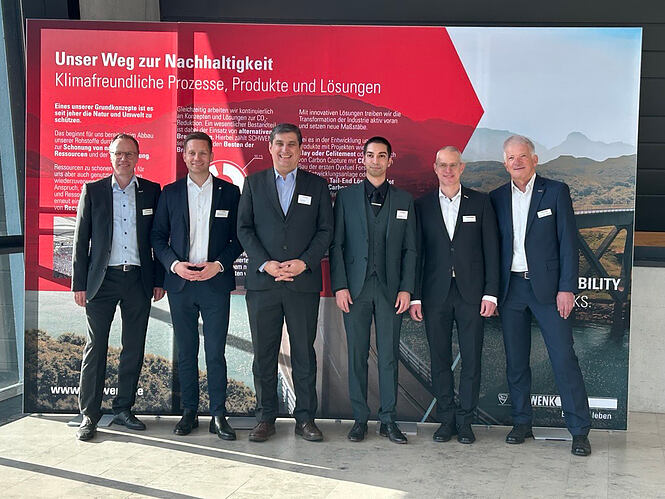
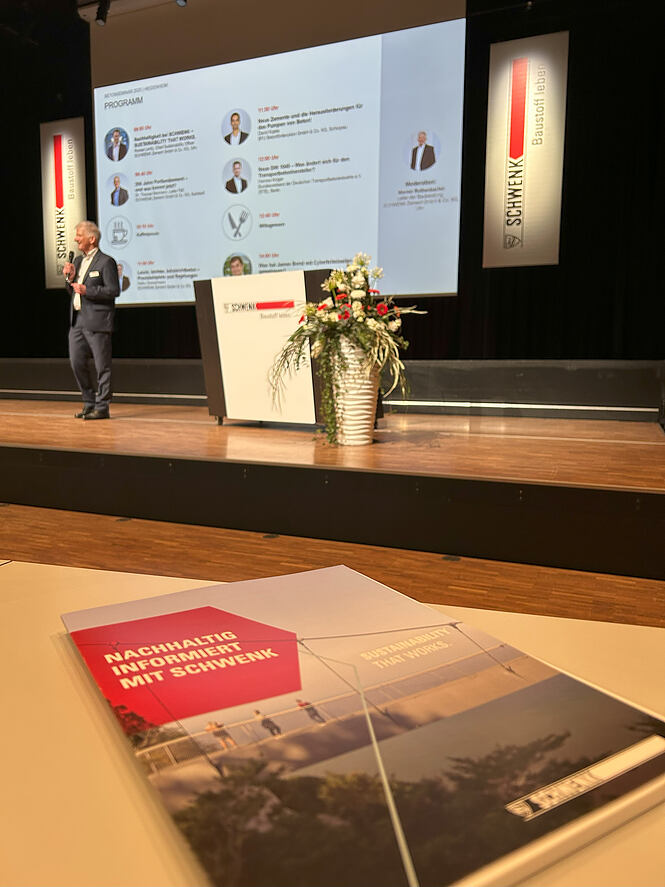
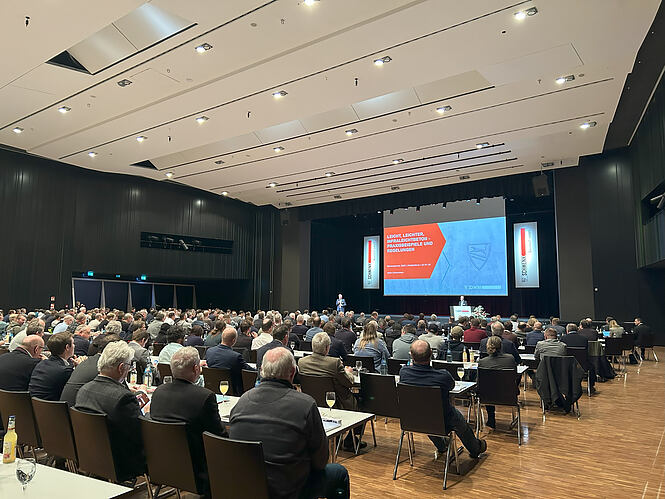
On January 23, 2025, Werner Rothenbacher, Head of SCHWENK Application Technology, will welcome approximately 340 participants to the Congress Centrum in Heidenheim for the 2025 Concrete Seminar. Among the guests are numerous customers, contracting authorities, government officials, and representatives from universities.
The Concrete Seminar will take place on January 28, 2025, in Schweinfurt and on January 30, 2025, in Leipzig. With the exception of the afternoon presentation, the program schedule and presentation content will be identical at all locations. The goal is to inform attendees about the latest developments in cement production and concrete construction and to promote technical exchange within the building materials industry.
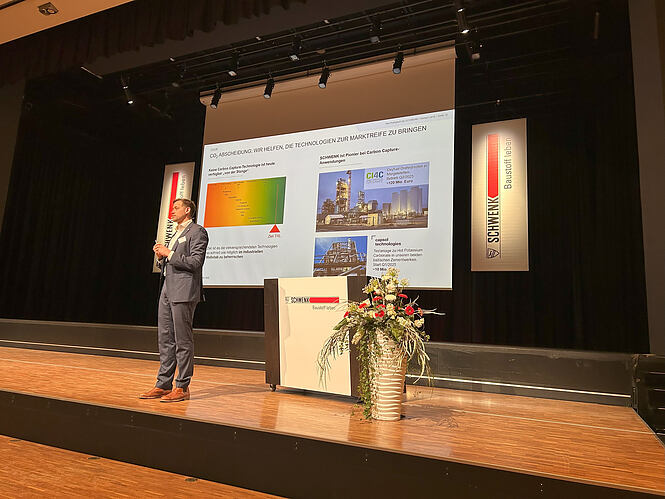
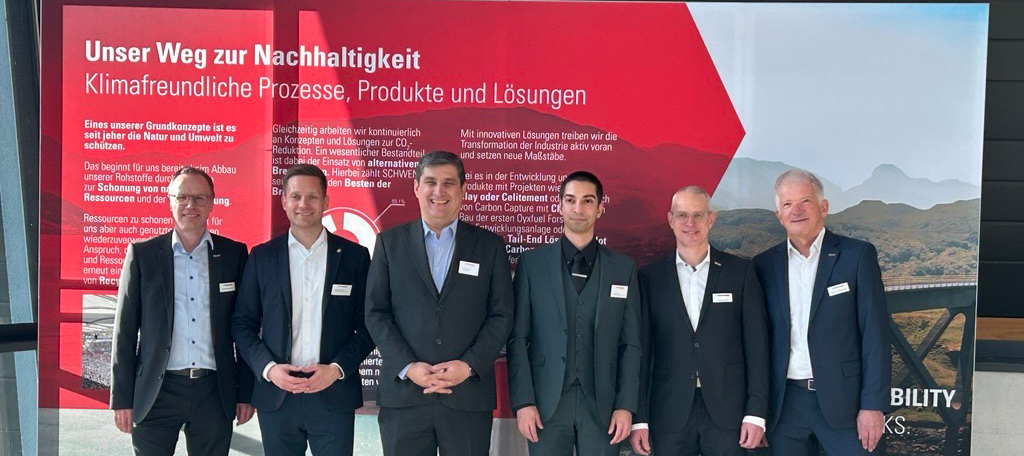
Roman Lentz, who has been responsible for sustainability at SCHWENK as Chief Sustainability Officer (CSO) for the past 1 1/2 years, introduces himself to the attendees of the concrete seminar for the first time in this role and presents the company’s concrete path to decarbonization as well as its sustainability strategy, guided by the core values “For Future Generations” and “Two Steps Ahead.” For many years, SCHWENK has been committed to developing low-carbon cements and processes leading to climate-neutral binders through innovative technologies. In doing so, the company is assuming a technology leadership role in the German cement industry and is also investing in green electricity as well as mechanically activated clay (MeCa-Clay) as a pozzolan and cement additive. Continuous product development will continue, but only CO2 capture will actually make cement production climate-neutral. The CI4C research facility in Mergelstetten, which is testing the “Pure Oxyfuel” process on a large scale for the first time worldwide, is scheduled to begin operations in the second quarter of 2025. The goal is to operate a climate-neutral cement plant within the SCHWENK Group by 2030. At the same time, investments are being made in the circular economy. In Achstetten, aggregates are now being extracted and processed in a soil washing plant in a resource-efficient manner. SCHWENK has set itself the goal of providing the market with functional and sustainable products: “SUSTAINABILITY THAT WORKS.”
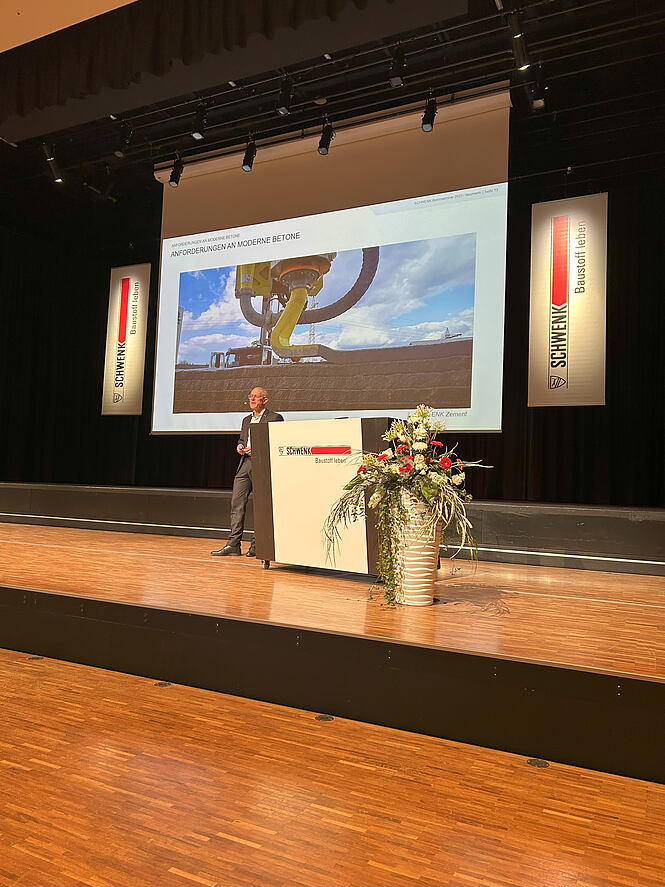
Much has changed since Joseph Aspdin patented Portland cement in 1824. To mark this milestone, Dr. Thomas Neumann, Head of Research and Development at SCHWENK and Laboratory Manager at the Karlstadt cement plant, presents the company’s latest advancements in the field of sustainable and high-performance building materials. One of the latest developments is the use of 3D printing with ready-mix concrete using
clinker-efficient cements for the construction of residential buildings. The modified “KARLOS” concrete pump from Putzmeister is used for this purpose. A key research focus is on further reducing the carbon footprint of the binders. A comparison of the Global Warming Potential (GWP) of various cements reveals significant differences. In the future, labels for CO2 classes will categorize climate friendliness. The classification ranges from A to E to provide users and builders with transparency and guidance, similar to the classification of electrical appliances. For special binders produced with virtually no CO2 emissions, the class (NZ) “near zero” may be assigned. An impressive example of CO2 savings in a specific project is the first-time use of SCHWENK CEM III/A 52.5 N/SR (Karlstadt plant) as shotcrete and in the inner lining of the S21 tunnel construction, which enabled a CO2 reduction of approximately 160,000 tons. Despite these advances, challenges remain in the development of climate-friendly cements and alternative binders. Durability, particularly resistance to frost and de-icing salt, poses significant challenges in this regard. Novel binders may no longer be suitable for all exposure classes. Nevertheless, a wide range of low-carbon products is already available today, making an important contribution to the sustainability of the cement industry.
In his presentation, construction consultant Heiko Zimmerman explains the regulatory framework and the composition of ultra-lightweight concrete (ILC). He presents key performance metrics and highlights several prominent projects, such as the Carl Orff Museum in Dießen am Ammersee. Ultra-lightweight concrete used in monolithic construction is a sustainable building material that offers advantages in fire protection and recycling. Corrosion protection (stainless steel, galvanized) is required for load-bearing reinforcement. Transport and installation on the construction site are typically carried out using a crane bucket. The carbon footprint of ILC in phases A1–A3 is approximately 105 kg CO2 equivalent per m² of wall, assuming a wall thickness of 50 cm, making it comparable to other wall constructions. Currently, the cost of an ILC wall is about 15 to 20% higher than that of a brick wall construction. In the future, individual case approval (ZiE) will no longer be necessary, as a guideline for ultra-lightweight concrete is currently being developed by the German Committee for Reinforced Concrete (DAfStb). The introduction of the guideline will reduce uncertainties in design and application and further promote this innovative building material.
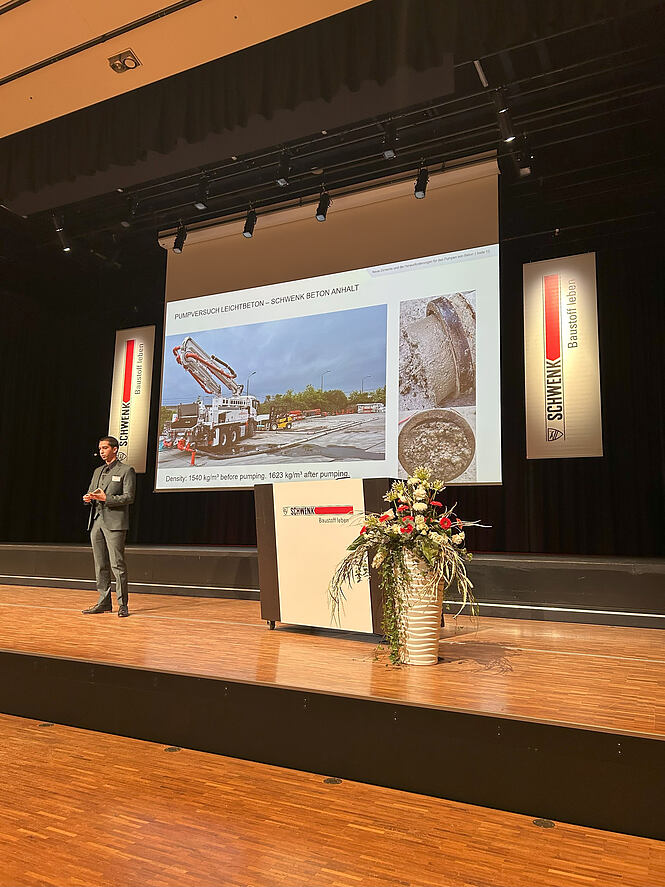
“New Cements and the Challenges of Pumping Concrete” is the topic presented by David Kupke (BFU Betonförderunion, Schkopau). He begins by introducing the company and its locations. The company currently operates 228 concrete pumps of all sizes and types. In a project it initiated itself
Pump tests have measured peak pressures of up to 85 bar in some cases. For occupational safety reasons, such pressure conditions pose a risk and should therefore be avoided. The effects of different concrete compositions and cement additives on pumpability were empirically investigated in these tests. By collecting measurement data in cooperation with TU Dresden, reliable early detection of concrete blockages during pumping (“clogging”) was achieved using specially developed sensor technology with the “Huckepack” system. In practice, the average reaction time required to prevent a blockage is about one second, which practically precludes timely human intervention in the pumping process. The newly developed technology enables the statistical prediction of a blockage, based on measured sensor data and empirical values, with a warning time of 10 to 15 seconds. The goal is to work with the concrete pumping industry to translate these findings into a practical and robust system to support concrete pump operators.
In his presentation, Hannes Krüger from the Federal Association of the German Ready-Mix Concrete Industry (BTB) provides a comprehensive overview of the new DIN 1045 series. In Schweinfurt, construction consultant Christian Fratscher will deliver this presentation. The structure of the standard and the classification system of the BBQ classes, as well as their applications, will be explained in detail. In addition, the speaker will address important aspects of the now-required tendering and execution discussions. Another focus will be on the possible uses and admixture quantities of recycled materials in R-concrete and the requirements for the minimum binder volume to ensure the robustness of concrete mixtures. The timeline for implementing the Model Administrative Regulation on Technical Building Regulations (MVV TB 2024/1) in the individual federal states is also a topic of discussion. Krüger emphasizes the importance of process responsibilities within the communication and quality chain. He notes that the ready-mix concrete industry does not have a leading role or documentation obligations under the BBQ concept, but rather assumes a supporting and advisory function.
The afternoon events provided the participants with another enjoyable and entertaining experience to round off the day.
The 2025 Concrete Seminars were once again a success, reinforcing SCHWENK Bauberatung’s commitment to organizing another engaging event in 2026 at its three locations, featuring current topics and projects related to sustainable concrete construction. We would like to take this opportunity to thank all our colleagues whose collaboration and support contributed to this success.