 Menu
Menu



AT SCHWENK
CEM II/C-M (S-LL) 42.5 N for bridge caps
Cement has become an indispensable building material in our society. There is no building that can be constructed entirely without cement. In recent years, in addition to technological properties, environmental considerations have become increasingly important in the construction sector. For this reason, reducing CO2 emissions is a top priority at SCHWENK.
SCHWENK rose to this challenge at a very early stage by producing Portland composite cements. Portland limestone, Portland fly ash, and Portland slag cements were the result of this determined development effort and are still in use today as standard cements.
Shortly thereafter came the development of Portland composite cements containing more than two main components. Here, too, SCHWENK played a pioneering role in the cement industry.
CEM II/C-M (S-LL) 42.5 N
Following extensive testing and the successful completion of field trials over the past year, the new CEM II/C-M (S-LL) 42.5 N is now setting a new standard for clinker-reduced cements.
Compared to CEM II/A-S 52.5 N, which will continue to be produced until December 31, 2023, this binder reduces CO2 emissions by approximately 20%. Until now, CEM II/A-S 52.5 N has been used in the Franconian region for the production of bridge deck concrete. Since this cement will only be available until December 31, 2023, and bridge structures must also be constructed with reduced emissions in the future, it was necessary to find a suitable alternative.
The cap concrete made with the new cement or cement blend must meet both the concrete properties specified in the ZTV-ING and the requirements of Autobahn GmbH Bayreuth (see Table 1).
| Requirements for cap concrete from ZTV-ING Part 3: Solid Construction, Sections 1 and 2 | |
| Exposure classes | XC4; XF4; XD3 |
| Minimum compressive strength class | C25/30 |
| w/z ratio | ≤ 0.50 |
| Fly ash | Not counted |
| When using CEM II-M cements | Client approval required |
| When using CEM III/A | HÜS content ≤ 50% by weight |
| LP content | 8 mm ≥ 6.5% by volume; 16 mm ≥ 5.5% by volume; 32 mm ≥ 5.0% by volume |
| Concrete Frost and De-icing Salt Resistance (CDF) | Weathering after 28 freeze-thaw cycles ≤ 1500 g/m² |
| NaCl method for aggregate | Weathering ≤ 8% by mass |
| Additional requirements of Autobahn GmbH Bayreuth | |
| LP content | 6–9% by volume |
| Compressive strength after 28 days | ≤ 50 N/mm² |
| Chloride migration coefficient after 35 days | ≤ 10×10⁻¹² m²/s |
| Concrete Frost and De-icing Salt Resistance (CDF) | Weathering after 28 freeze-thaw cycles ≤ 500 g/m² |
Table 1: Requirements for cap concrete according to ZTV-ING Part 3 and additional requirements of Autobahn GmbH
Given the high requirements for chloride migration resistance and resistance to frost and de-icing salt, it was necessary to identify a cement or cement blend that could meet these stringent criteria. Furthermore, a selection had to be made that would be available at all SCHWENK ready-mix concrete plants in Franconia. Table 2 presents the corresponding compositions and test results.
| 1. Cement | CEM II/C-M (S-LL) 42.5 N | CEM III/A 42.5 N-LH | CEM II/A-LL 52.5 R |
| 2. Cement | CEM II/A-LL 52.5 R | CEM II/A-LL 52.5 R | – |
| Additive | – | – | Fly ash |
| w/z ratio | 0.46 | 0.46 | 0.46 |
| Expansion after 5 min | 410 | 440 | 400 |
| LP content | 8.0 | 8.0 | 6.5 |
| Compressive strength: | |||
| 2 d | 17.2 | 15.2 | 29.7 |
| 28 d | 32.9 | 36.2 | 51.4 |
| Chloride migration coefficient [m²/s] | 6.90×10⁻¹² | 5.99×10⁻¹² | 2.86×10⁻¹² |
| Weathering after 28 FTW [g/m²] | 297 | 745 | 395 |
Table 2: Test results for possible cap concrete mixes
After reviewing all mixtures, it became clear that only the combination of CEM II/C-M (S-LL) 42.5 N and CEM II/A-LL 52.5 R cements meets the required durability criteria.
As early as February 2023, discussions were held with Autobahn GmbH Bayreuth regarding the test results and potential test sites. Following approval, preliminary tests for a pilot concrete pour are currently being conducted.
Provided that the cement blend in the cap concrete proves effective in practice, SCHWENK aims to use CEM II/C-M (S-LL) 42.5 N in all structural components of the ZTV-ING in the future.
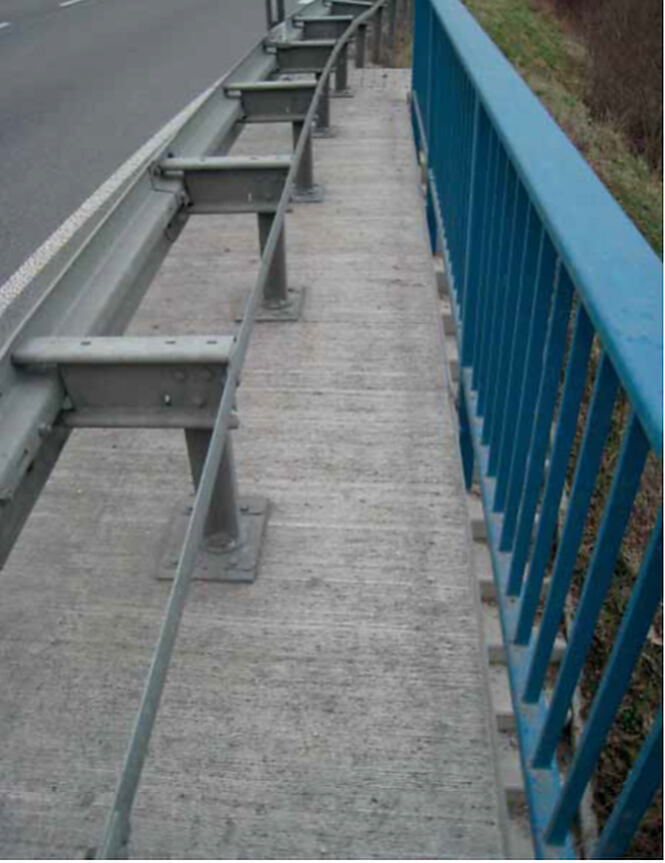
Figure 2: Troweled concrete with a broom finish