Menu
Menu


AT SCHWENK
SCHWENK Suevit for ESA’s Project LUNA
SCHWENK is proud to be part of an exciting space project: supplying Suevit for the ESA’s LUNA facility.
The European Space Agency’s (ESA) Project LUNA is an innovative initiative to simulate the exploration and colonisation of the Moon. LUNA stands for Lunar Analog Facility and refers to a facility being built at the European Astronaut Centre (EAC) in Cologne. In this facility, astronauts, scientists and engineers will train under conditions as close as possible to those on the Moon. The goal is to test new technologies, procedures and strategies that will be useful for future lunar missions.
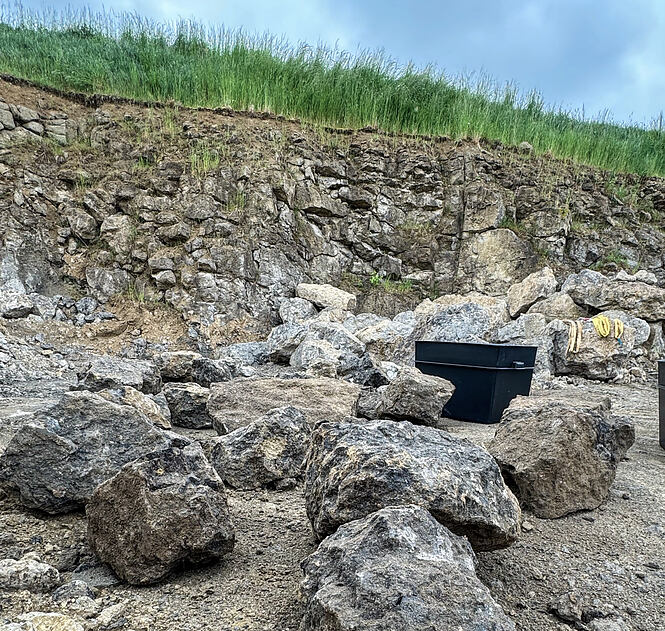
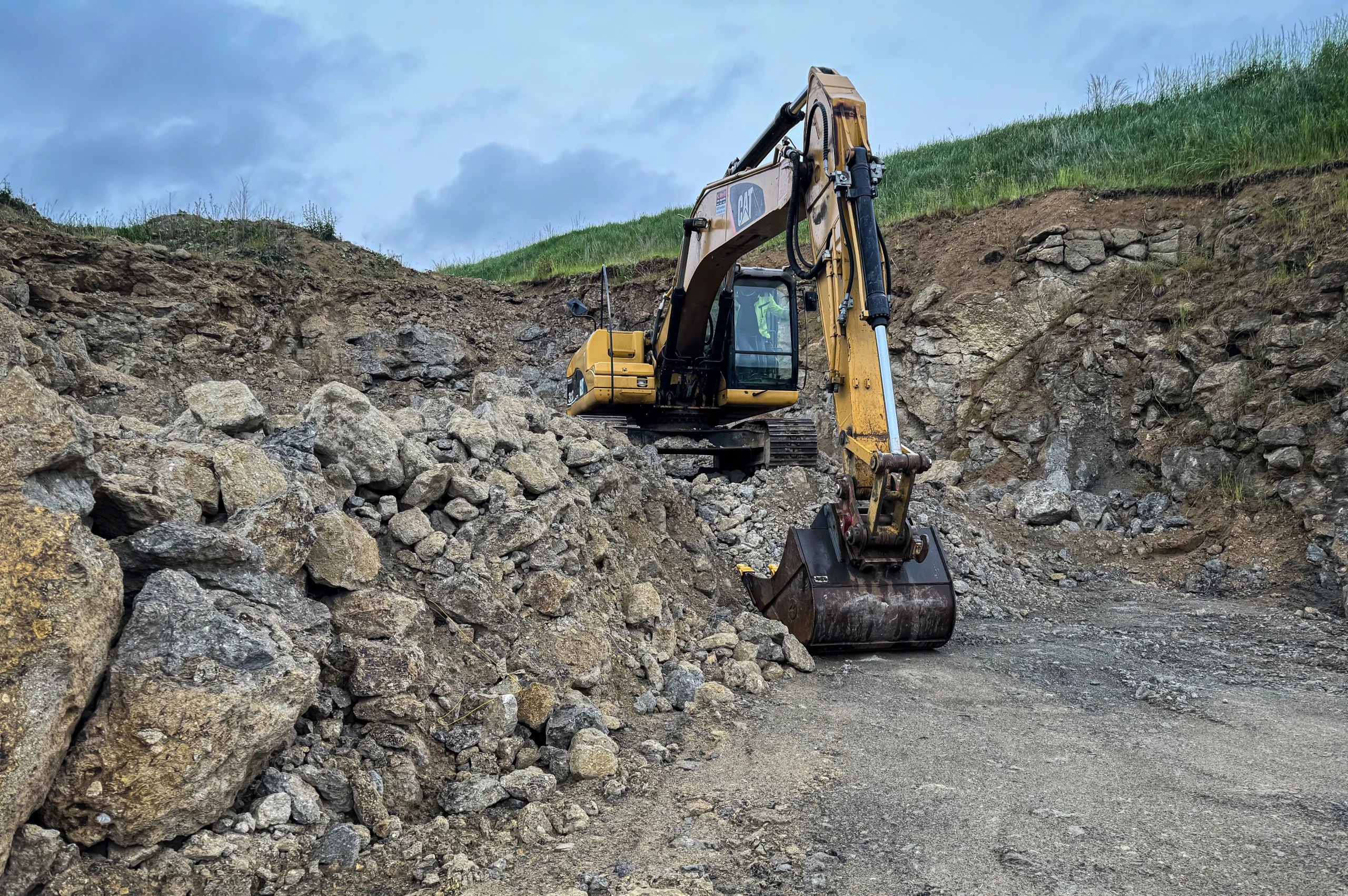
To create realistic training conditions in the facility, a special rock from southern Germany is being used, which is quarried by SCHWENK at the Aufhausen quarry for cement production: the Suevit. The Suevit was formed approximately 15 million years ago during a massive meteorite impact that created a crater 24 kilometres in diameter. Due to its formation history and the associated geological composition and structure, which resembles that of lunar rock, Suevit is the ideal material for Project LUNA.
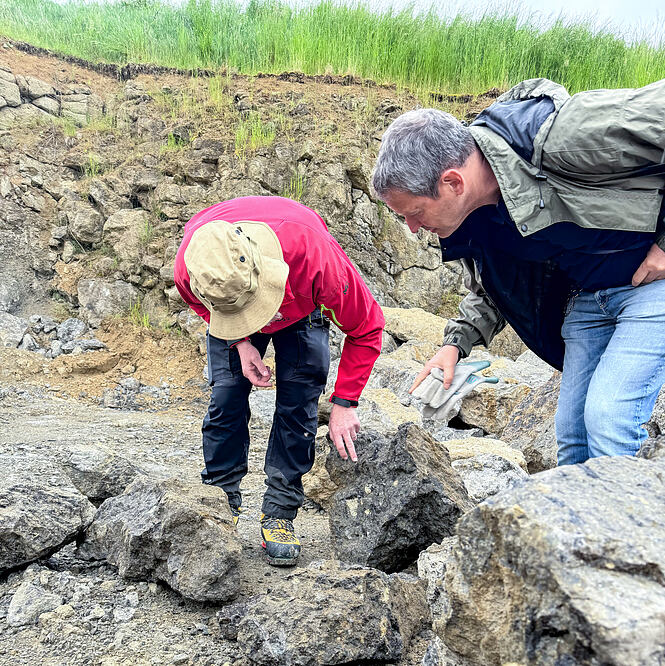
To collect the relevant rocks, SCHWENK welcomed two ESA employees and the director of the Ries Crater Museum at the Aufhausen trass quarry on 21 May. The ESA was looking for high-quality Suevit with the lowest possible moisture content and high porosity. SCHWENK’s Suevit meets these criteria and is also easy to process and transport.
For decades, SCHWENK, the Ries Crater Museum and the UNESCO Geopark Ries have maintained a close cooperation, through which international research groups and the interested public are given access to Suevit, a rock unique in the world.
We are very pleased about this collaboration and hope that our Suevit will help to gain new insights into the Moon.
At the same time, SCHWENK also hosted a group of students from the Institute of Planetology at the University of Münster, who visited our quarry as part of a field trip. The students were very interested in the Suevit and the geological processes in the quarry and were able to gain extensive insights.