Menu
Menu


AT SCHWENK
SCHWENK Concrete Seminars 2026 – Transformation with Realism
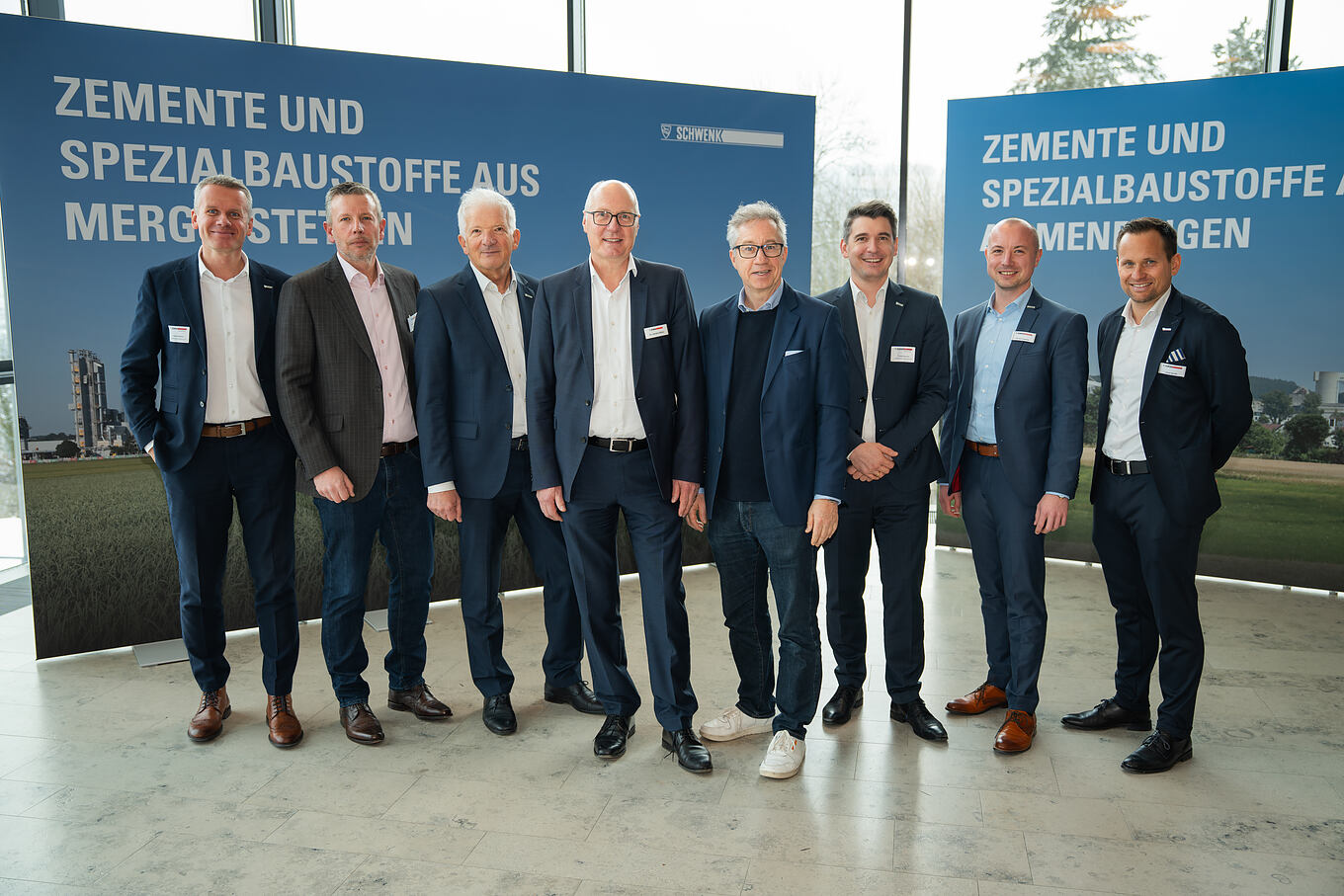
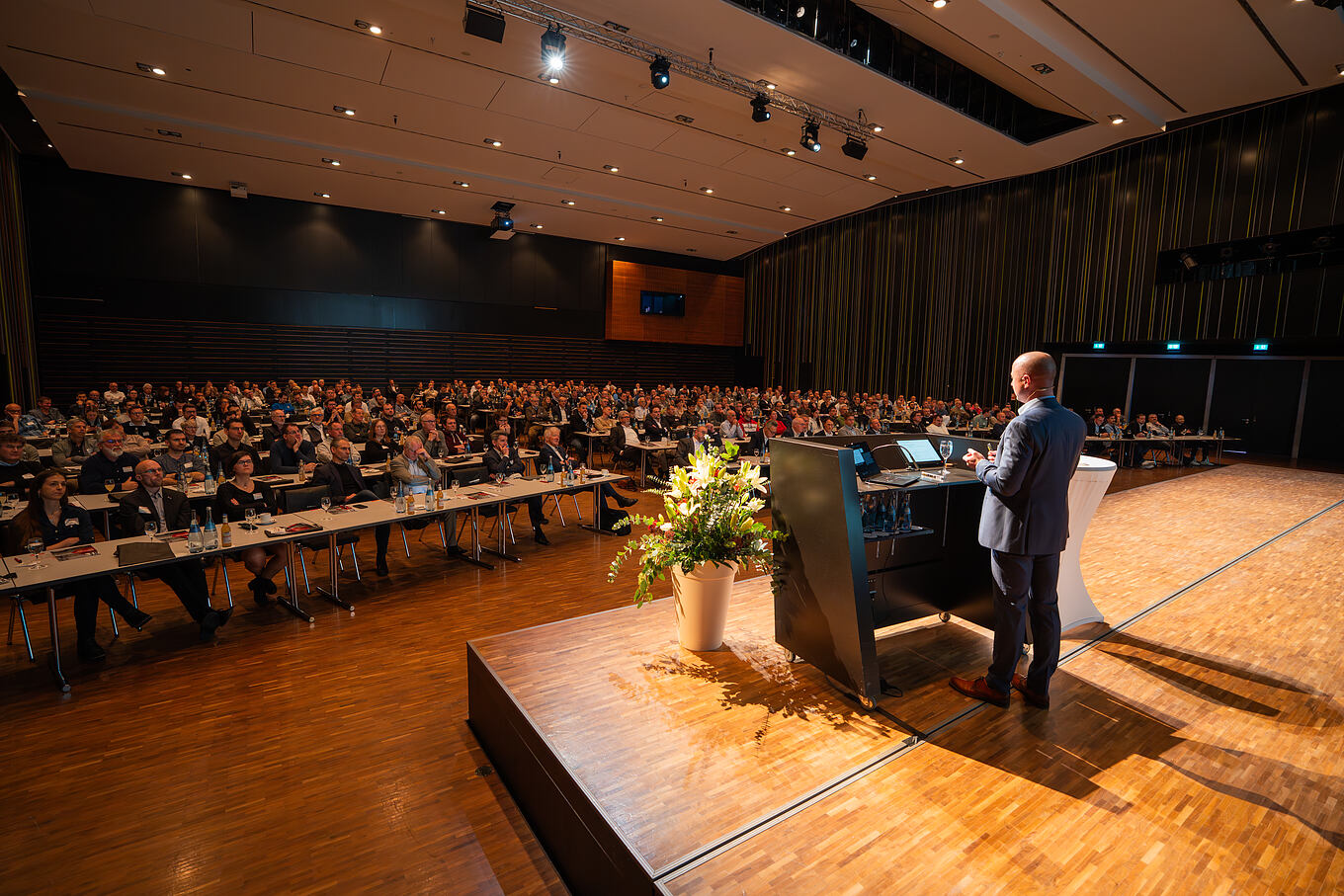
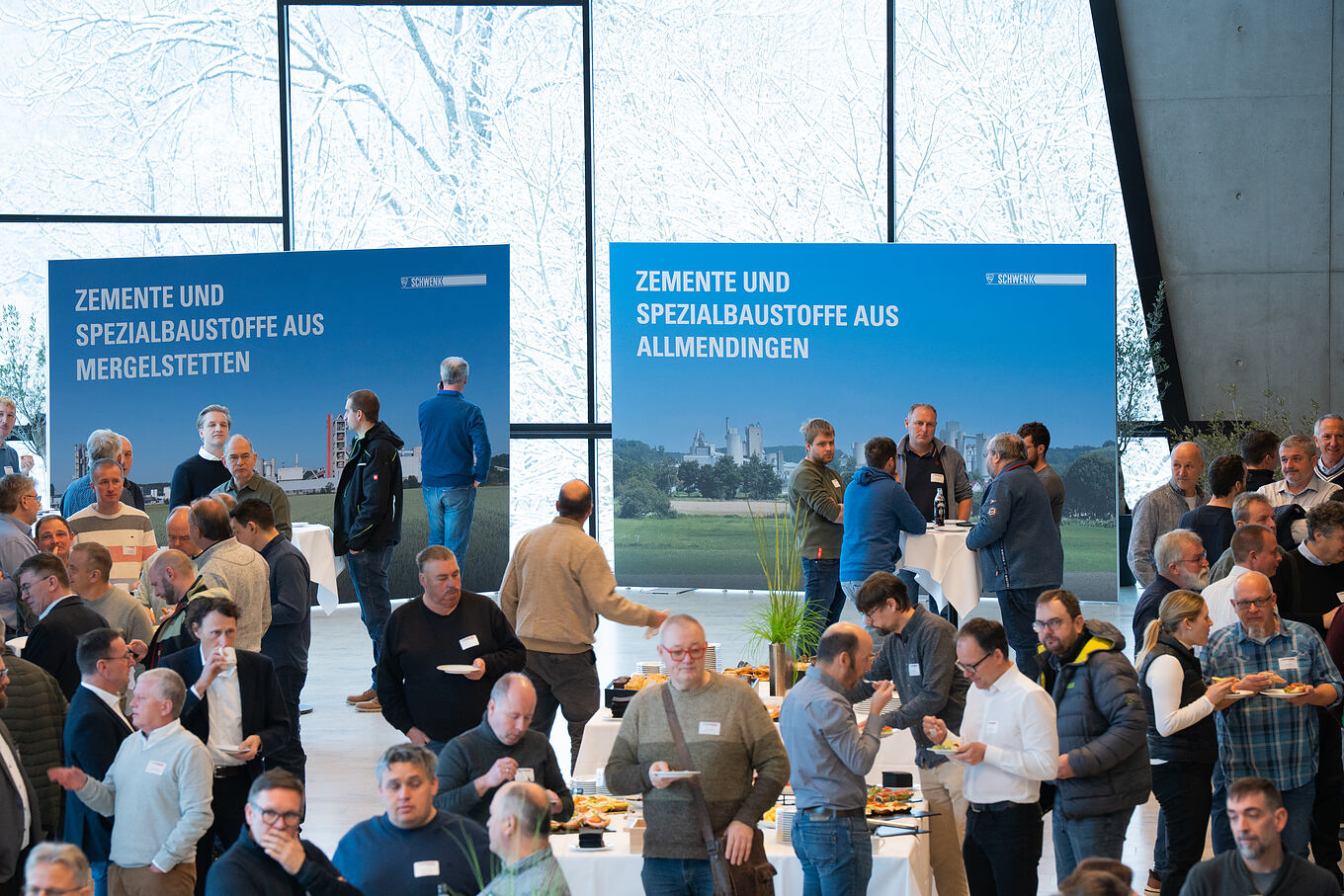
At the beginning of the year, the SCHWENK concrete seminars in Leipzig, Schweinfurt, and Heidenheim serve as a meeting place for the cement-processing building materials industry, construction companies, and planners. Over 700 guests took the opportunity to exchange ideas, network, and experience the latest developments in the industry.
As usual, Werner Rothenbacher, Head of Construction Consulting at SCHWENK, welcomed and moderated the events. Each event was rounded off by an entertaining expert talk on the topics of cybersecurity, non-verbal communication, and artificial intelligence.
In the opening presentation, Dr. Hendrik Möller, member of the Management Board, provided a clear overview of market developments and the strategic direction of the SCHWENK Building Materials Group. Despite a challenging market environment with declining cement consumption, SCHWENK remains steadily on course. In 2026, particular focus will be placed on the CBAM compensation mechanism, accompanied by a further reduction in free certificate allocations and a lowered benchmark for clinker production.
SCHWENK pursues a consistent decarbonization strategy:
- Reduction of clinker content through established SCM concepts,
- Decarbonization of clinker production, including through investments in CCS technologies
- Strengthening the circular economy through acquisitions and investments,
- Innovations and use of renewable energies along the value chain.
An important milestone in innovation: after four years of intensive testing, the innovative Celitement® binder received general building approval—as the only binder for all concrete exposure classes.
Tobias Kaschke then presented the “catch4climate” project – one of the most exciting topics for the future of the cement industry at present. For the first time, four companies are pooling their expertise to test the pure oxyfuel process for CO₂ capture under real conditions. The research and development facility in Mergelstetten is expected to produce around 450 tons of clinker per day in campaigns lasting several weeks and is being implemented deliberately without subsidies. The key objectives are high capture efficiency, minimal energy consumption, and ensuring product quality. The process also offers the opportunity to develop high-performance clinker. The 50 employees have already undergone intensive training.
Sven Mellwitz and Christian Fratscher delivered the practice-oriented technical presentation titled “Compressive Strength and Durability: Modern Cements at the Intersection of Technology and the Environment” at the Leipzig site, while their colleagues presented at the Schweinfurt and Heidenheim sites. The presentation covered the evolution of cement type distribution in Germany as well as strategies for increasing the use of admixtures such as granulated blast furnace slag, fly ash, limestone, or—in the future—mechanically activated clay. These enable significant CO₂ reductions through lower clinker content. The speakers provided an overview of site-specific clinker-reduced cements and their application guidelines. A key issue remains the availability of additional silo space at customers’ sites.
Furthermore, the advantages and challenges of sustainable cements in the ready-mix concrete and precast concrete industries were discussed—ranging from CO₂ reduction potential and necessary mix design adjustments to the benefits of Portland composite cements for moderating the temperature rise of massive structural elements. In addition, EPDs, the new CCC label, relevant CSC labels, and CSC modules for documentation were presented. Forecasts for CO₂ cost trends clearly show that clinker-reduced cements are becoming increasingly economically attractive. The industry must find a balanced compromise between technical requirements, production processes, economic viability, and climate protection. SCHWENK Bauberatung reliably supports its clients in this process. The appropriate high-performance, clinker-reduced binders are already available at all plants today.
Under the title “Construction Lot H53 Pfons–Brenner: Tunnel construction in the heart of the Alps,” construction managers Werner Fleißner and Alexander Mattle (PORR Bau GmbH) presented the work on Austria’s largest tunnel construction project and the world’s longest railway tunnel. Since May 2023, the PORR–MARTI consortium has been implementing construction lot H53, a central section of the Brenner Base Tunnel, with a contract volume of €959 million and a planned construction period of 70.5 months. The presentation impressively demonstrated the scale of the project: two single-track main tunnel tubes over 25.2 km and 3.6 km of exploratory and cross passages are being constructed. Two Herrenknecht double-shield tunnel boring machines (Ø 10.37 m) and conventional blasting are being used in the project. Internal construction site logistics for tunnel segments, excavated material, and aggregates play a special role, with most of this being handled by rail. SCHWENK supplies CEM I 52.5 N-SR 0 wet shotcrete from its Allmendingen plant – an important component for this infrastructure project of European significance.
We look forward to seeing you again at the SCHWENK concrete seminars in January 2027!