 Menu
Menu


AT SCHWENK
3x the power for building material recycling in southern Germany
Max Wild, SCHWENK, and Auto-Mann are planning a new wet mechanical treatment plant in Offingen in the district of Günzburg.
Berkheim/Ulm/Offingen.
Max Wild GmbH, based in Berkheim, SCHWENK from Ulm, and transport and logistics service provider Auto-Mann GmbH & Co. are planning to jointly build a new wet mechanical processing plant at the Auto-Mann branch in Offingen (Günzburg district). Operating in two shifts, the plant will be able to process up to 250,000 tons of mineral excavated soil and track ballast per year into high-quality recycled building materials.
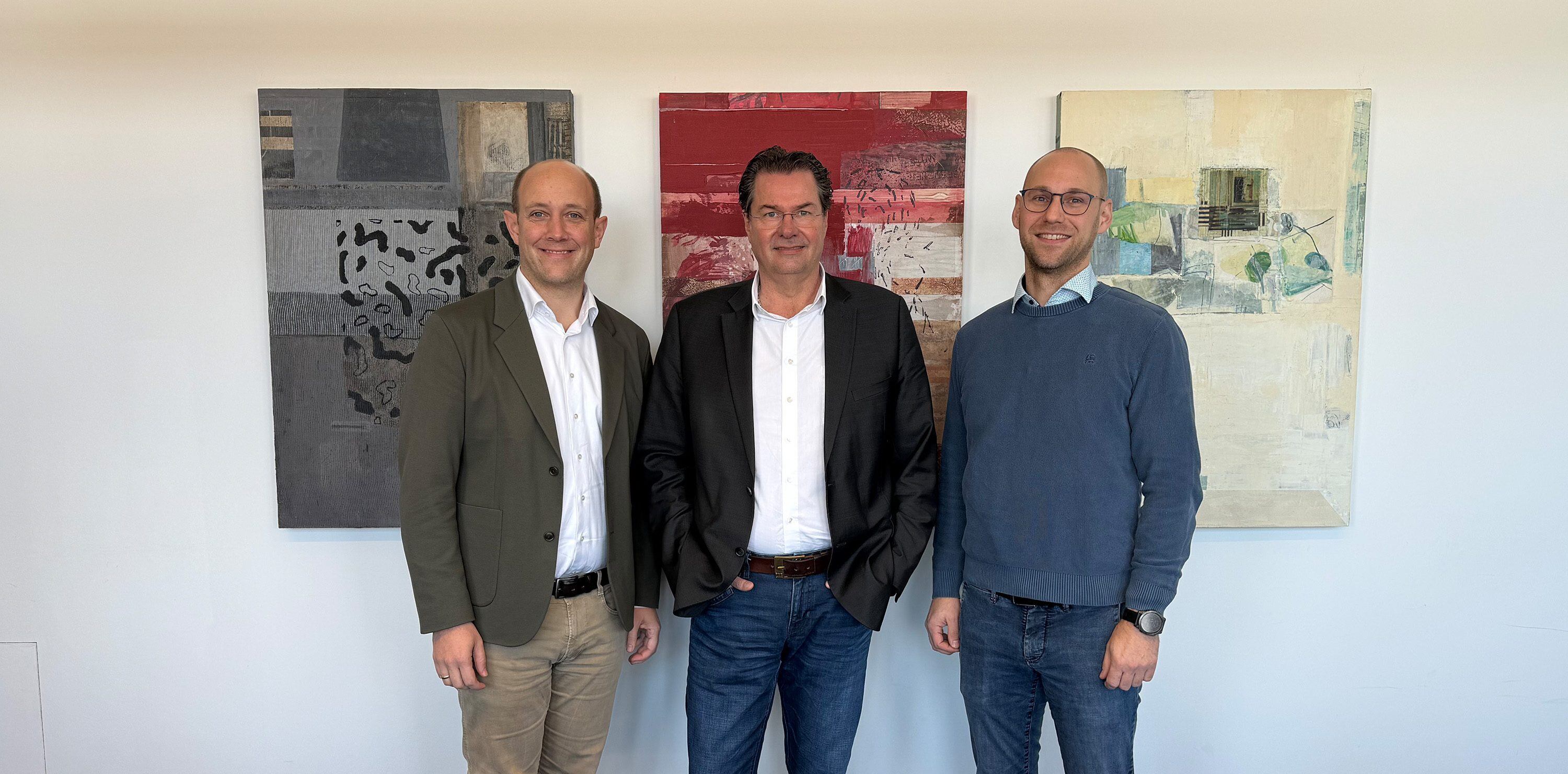
The companies Max Wild, SCHWENK, and Auto-Mann, represented by Markus Wild, Joachim Kainz, and Christian Mann, are medium-sized regional companies that intend to pool their expertise in a new joint venture in Offingen near Günzburg, subject to antitrust approval. In doing so, they are making a significant contribution to the conservation of raw materials and resources in the region.
Wet mechanical processing plant in Offingen
The new plant in Offingen, with a planned capacity of 250,000 tons, will save approximately 1.7 hectares of agricultural gravel areas each year. The soil composition in the greater Günzburg area is sandy and gravelly. These soils are generally used for backfilling measures and are thus removed from the circular economy. The wet mechanical processing plant allows sand and gravel to be extracted from regional soils and returned to the sand and gravel market.
“I am delighted about the partnership with Max Wild and SCHWENK, two strong players in the field of building material recycling,” says Christian Mann, Managing Director of Auto-Mann GmbH & Co. Preliminary planning for the new wet mechanical processing plant in Offingen (Günzburg) is scheduled to start in early 2026. Once approval has been granted, construction is expected to take 1.5 years.
3x the expertise, 3x the capacity
For Auto-Mann, this would be its first wet mechanical processing plant. The company, based in Blaubeuren with a branch in Offingen, is known nationwide as a soil substrate manufacturer and service provider for rail transshipment and bulk goods packaging. For SCHWENK, this would be the second plant built in cooperation with Max Wild. Under the umbrella of the joint venture SW BAUMINERALIK Donau Iller GmbH & Co. KG, a wet mechanical processing plant is currently being built in Achstetten near Laupheim, which is scheduled to go into operation in May/June 2026. With the plant in Offingen, Max Wild would be building its third wet mechanical processing plant. Max Wild has been operating a wet mechanical processing plant at its own waste disposal center in Eichenberg (Berkheim) since 2020, making it one of the pioneers in building material recycling. “We were one of the first German construction companies to focus on building material recycling on a large scale,” emphasizes Markus Wild.
Together with the existing wet mechanical processing plants in Eichenberg and Achstetten, the new plant in Offingen will triple recycling capacity to a total of 750,000 tons. “At SCHWENK, we see the processing of mineral building materials as an essential part of the circular economy. I am therefore all the more pleased that we are now planning another wet mechanical processing plant. Together with Max Wild and Auto-Mann, we want to further increase the regional recycling rate,” says Joachim Kainz, responsible for the Circular Economy & Recycling division at SCHWENK.
Auto-Mann’s Offingen site near Günzburg is not only strategically located on the A8 motorway, but also has an efficient rail connection, where there are additional plans to transship natural sand and other raw materials for the region.